


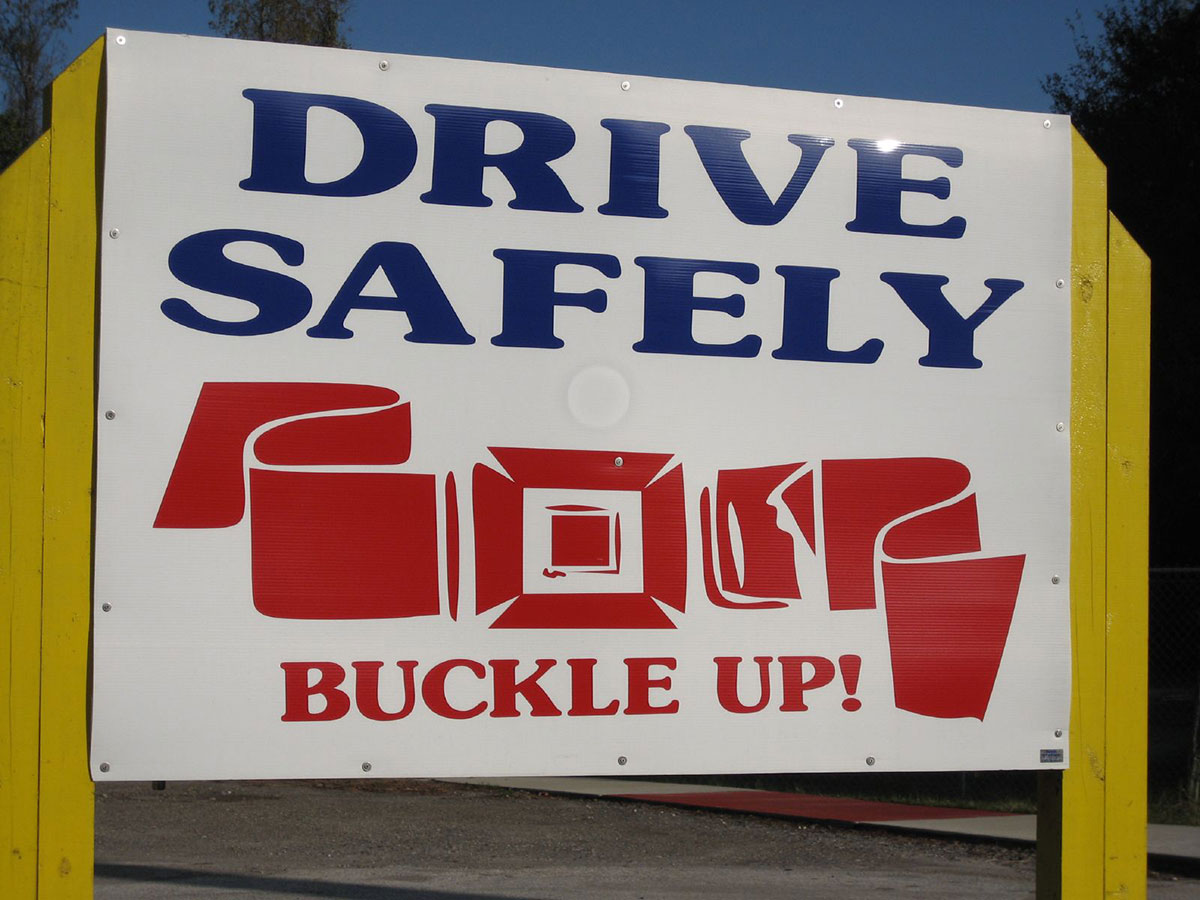
02 Mar Drive Safely
Drive Safely
Driving is one of the most common hazards employees may face while working or traveling for business. Motor vehicle crashes can result in serious injuries and fatalities, but many crashes can be prevented through defensive driving, proper vehicle operation, seat belt use, appropriate speed, and eliminating distractions.
Every driver is responsible for operating the vehicle safely and adjusting driving practices to current traffic, weather, roadway, and visibility conditions.
Control Your Speed
Posted speed limits represent the maximum lawful speed under favorable conditions. A lower speed may be necessary when conditions are less than ideal.
Drivers should:
- Obey all posted speed limits and traffic-control devices.
- Reduce speed for rain, snow, ice, fog, construction zones, heavy traffic, poor visibility, or damaged road surfaces.
- Slow down before curves, intersections, and other areas where hazards may develop.
- Never drive faster than conditions safely allow.
- Allow additional time for travel rather than attempting to make up time by speeding.
Higher speeds reduce the amount of time available to recognize and react to hazards and can increase the severity of a crash.
Maintain a Safe Following Distance
Maintain enough distance between your vehicle and the vehicle ahead to allow time to recognize a hazard and stop safely.
As a general defensive-driving practice, maintain at least a three-second following distance under favorable conditions. Increase that distance when:
- Roads are wet, icy, snowy, or otherwise slippery.
- Visibility is poor.
- Traffic is heavy or unpredictable.
- Driving at higher speeds.
- Following large vehicles that restrict your view.
- Towing a trailer or carrying a heavy load.
- Road or vehicle conditions increase stopping distance.
Avoid tailgating. If another driver is following too closely, increase the space ahead of your vehicle rather than responding aggressively.
Make Turns and Lane Changes Safely
Before turning, merging, or changing lanes:
- Signal sufficiently in advance.
- Check mirrors and blind spots.
- Make sure there is adequate space before entering another lane.
- Never assume another driver will stop, turn, or yield simply because they have activated a turn signal.
- Avoid sudden lane changes or abrupt maneuvers.
- Yield the right-of-way when required.
Drive Defensively
Defensive drivers constantly monitor the roadway and anticipate what other drivers, pedestrians, bicyclists, and equipment operators may do.
Keep your eyes moving and regularly check:
- The roadway well ahead of your vehicle.
- Vehicles immediately around you.
- Mirrors and blind spots.
- Intersections and driveways.
- Pedestrians and bicyclists.
- Traffic signals and signs.
- Road construction and changing surface conditions.
- Potential escape routes if a hazard develops.
Do not depend on other drivers to make the correct decision. Expect the unexpected and leave yourself enough time and space to respond safely.
Eliminate Distracted Driving
Driving requires your full attention. Before moving the vehicle, adjust the seat, mirrors, navigation system, climate controls, and other equipment.
While driving:
- Do not text, read, type, or otherwise manually use a mobile device.
- Avoid eating, grooming, reading, or other distracting activities.
- Do not reach for objects that require you to take your eyes from the road.
- Program navigation before beginning the trip or while safely parked.
- Pull over at a safe location before performing any activity that requires significant attention away from driving.
Hands-free technology does not eliminate the mental distraction associated with a conversation. Keep necessary conversations brief and end them whenever traffic or roadway conditions require your full attention.
Always Wear Your Seat Belt
The driver and every passenger must wear the available seat belt whenever the vehicle is moving.
- Wear the lap and shoulder belt properly positioned across the body.
- Never place the shoulder belt behind your back or underneath your arm.
- Do not begin driving until passengers are properly restrained.
- Never transport more occupants than the vehicle has designated seating positions and seat belts.
- Seat belts are required even when the vehicle is equipped with airbags.
Be Fit to Drive
Never operate a vehicle when your ability to drive safely is impaired.
Do not drive:
- After consuming alcohol or using impairing drugs.
- When medication adversely affects alertness, judgment, coordination, or reaction time.
- When excessively tired or drowsy.
- When illness or another condition prevents safe vehicle operation.
If you become fatigued while driving, stop at a safe location and rest. Opening a window, increasing the radio volume, or consuming caffeine is not a substitute for adequate rest.
Know Your Vehicle
Employees should be authorized and competent to operate the vehicle assigned to them. Before driving an unfamiliar vehicle, become familiar with its controls, dimensions, handling characteristics, and safety features.
Conduct required pre-trip inspections and report safety-related defects promptly. Do not operate a vehicle with a condition that makes it unsafe.
Remember
Safe driving requires more than simply following traffic laws. It requires continuous attention, good judgment, adequate following distance, appropriate speed, and anticipation of hazards.
Buckle up. Slow down. Stay focused. Leave yourself an escape route—and arrive safely.