


07 Apr Warehouse Safety
Warehouse Safety
Warehouses present a variety of hazards involving loading docks, material-handling equipment, conveyors, storage systems, and pedestrian traffic. Following established warehouse safety procedures can help prevent falls, struck-by and caught-between injuries, equipment incidents, and material-handling injuries.
Guide for Discussion
Loading Docks
Loading docks are high-activity areas where trucks, forklifts, pallet jacks, and pedestrians may operate in close proximity.
- Keep dock areas clean, dry, and free of obstructions.
- Stay back from unprotected dock edges and use required barriers, markings, or other protective measures.
- Secure trailers against movement before loading or unloading. Use wheel chocks, vehicle restraints, or other approved means as required.
- Verify dock plates and dockboards are properly positioned and capable of supporting the intended load.
- Never enter a trailer with a forklift until the trailer has been properly secured and the trailer floor has been determined capable of supporting the load.
- Watch for pedestrians, vehicles, and equipment moving through the area.
Conveyors
Moving conveyor components can create caught-in, caught-between, and pinch-point hazards.
- Keep hands, hair, clothing, and other body parts away from moving conveyor components.
- Never climb, sit, stand, walk, or ride on a conveyor unless specifically designed for that purpose.
- Know the locations of emergency stops and other controls.
- Never remove, bypass, or defeat conveyor guards or safety devices.
- Follow lockout/tagout procedures before servicing, clearing jams, cleaning, or performing maintenance when exposure to hazardous energy exists.
- Do not work beneath elevated conveyors unless protection from falling materials is provided.
Forklifts and Pallet Jacks
Only trained and authorized employees may operate powered industrial trucks.
- Inspect equipment before use and report defects immediately.
- Never exceed the equipment’s rated capacity.
- Center and stabilize loads before moving them.
- Travel at a safe speed and maintain adequate visibility.
- Use extra caution at intersections, doorways, blind corners, and congested areas.
- Keep pedestrians clear of operating equipment.
- Never allow unauthorized riders.
- Never use forklifts or pallet jacks to elevate employees unless an approved personnel platform and appropriate procedures are used.
Storage and Racking
Improperly stored materials can fall, shift, or collapse.
- Inspect racks and shelving for damage and report damaged components immediately.
- Do not overload racks, shelves, or storage systems.
- Stack and secure materials so they remain stable.
- Keep heavier materials on lower levels whenever practical.
- Do not allow materials to protrude into aisles or pedestrian pathways.
- Replace damaged pallets before placing them into storage.
- Secure palletized loads when necessary to prevent shifting or falling.
- Never climb storage racks or shelving.
Manual Material Handling
Use mechanical assistance whenever practical for heavy, bulky, or awkward materials.
- Evaluate the load before lifting.
- Use proper lifting techniques and maintain control of the load.
- Get assistance when a load cannot be safely handled by one person.
- Keep fingers, hands, and feet away from pinch and crush points.
- Wear required PPE appropriate for the materials and hazards involved.
Housekeeping
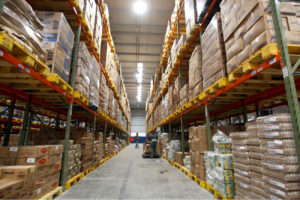
Good housekeeping is essential to warehouse safety.
- Keep aisles, exits, emergency equipment, and electrical panels unobstructed.
- Clean spills promptly.
- Remove damaged pallets, shrink wrap, straps, cardboard, and other debris.
- Keep floors free of holes, loose materials, and other slip or trip hazards.
- Store waste and recyclable materials in designated locations.
- Never allow materials to accumulate in emergency exit routes.
Remember
A warehouse combines pedestrians, vehicles, machinery, stored materials, and constantly changing work activities. Stay alert, follow designated traffic patterns, operate equipment only when trained and authorized, and correct or report unsafe conditions immediately.