


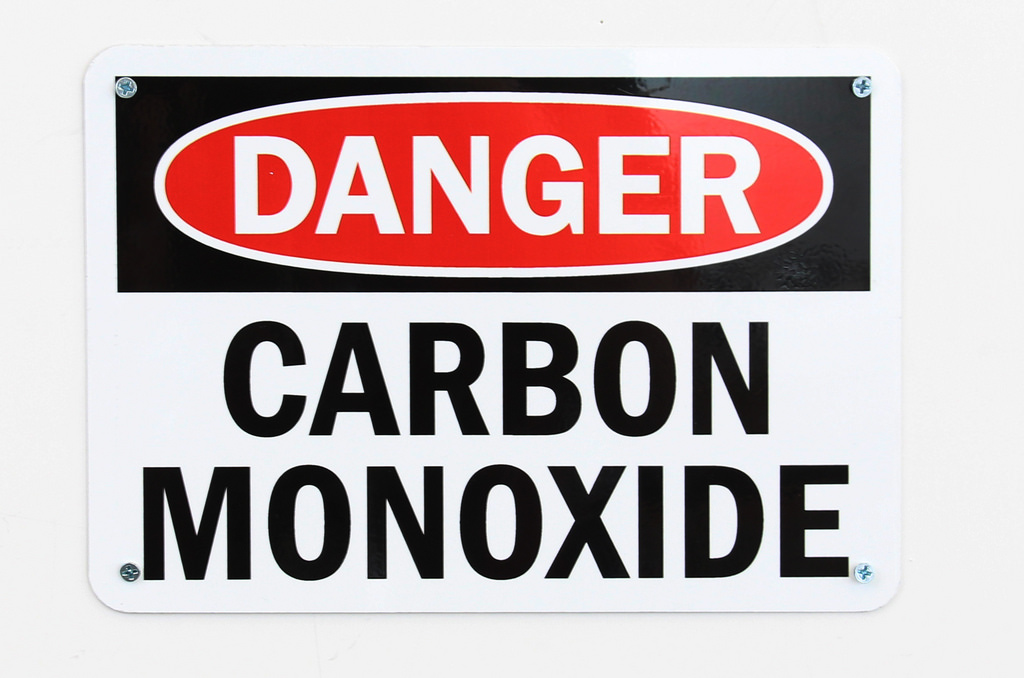
20 Sep Carbon Monoxide
Carbon Monoxide Safety
What Is Carbon Monoxide?
Carbon monoxide (CO) is a poisonous, colorless, odorless, and tasteless gas produced by the incomplete combustion of carbon-containing fuels such as gasoline, diesel fuel, propane, natural gas, oil, coal, and wood.
Common workplace sources of CO include:
- Internal combustion engines.
- Gasoline- or diesel-powered generators and compressors.
- Forklifts and other powered equipment.
- Vehicles operating in garages, warehouses, or enclosed areas.
- Fuel-fired heaters and furnaces.
- Welding and certain industrial processes.
Because CO cannot be detected by human senses, dangerous concentrations may develop without warning.
Health Hazards
Carbon monoxide is a chemical asphyxiant. When inhaled, CO enters the bloodstream and binds to hemoglobin, reducing the blood’s ability to carry oxygen to the body’s tissues and vital organs.

Symptoms of CO exposure may include:
- Headache.
- Dizziness.
- Nausea or vomiting.
- Weakness and fatigue.
- Confusion or impaired judgment.
- Rapid breathing.
- Chest discomfort.
- Loss of coordination.
- Unconsciousness.
- Death.
High concentrations can cause rapid unconsciousness and death with little or no warning.
Employees with cardiovascular disease and certain other medical conditions may be particularly susceptible to the effects of CO.
Occupational Exposure Limits
Under Federal OSHA, the permissible exposure limit (PEL) for carbon monoxide is 50 parts per million (ppm) as an 8-hour time-weighted average (TWA).
Other occupational exposure guidelines may be more protective. For example, NIOSH recommends 35 ppm as a TWA and a 200 ppm ceiling.
Employees must follow applicable federal, state, company, client, or site-specific requirements when those requirements are more stringent.
Fire and Explosion Hazards
Carbon monoxide is also a flammable gas at sufficiently high concentrations. Although workplace CO concerns typically involve its toxicity, CO should also be kept away from ignition sources where potentially flammable concentrations could develop.
Who May Be at Risk?
Employees who work around combustion equipment or in enclosed or poorly ventilated areas may be exposed. Examples include:
- Mechanics and automotive technicians.
- Welders.
- Firefighters and emergency responders.
- Forklift and equipment operators.
- Warehouse and shipping/receiving personnel.
- Generator and compressor operators.
- Workers in garages, tunnels, pits, confined spaces, and similar enclosed areas.
- Employees working around fuel-fired heaters or furnaces.
Methods of Controlling Carbon Monoxide
Eliminate or Control the Source
Whenever practical:
- Use electric, battery-powered, or other non-combustion equipment instead of fuel-powered equipment indoors.
- Position engines, generators, compressors, and exhaust-producing equipment outdoors and away from doors, windows, ventilation intakes, and other openings.
- Properly maintain engines, burners, exhaust systems, and other combustion equipment.
- Do not operate gasoline-powered equipment inside buildings or enclosed or partially enclosed spaces unless the CO hazard has been evaluated and effectively controlled.
Provide Adequate Ventilation
Use appropriate natural or mechanical ventilation to prevent CO accumulation.
Do not assume that opening doors or windows provides adequate protection. CO can accumulate to dangerous levels even in areas that appear to be ventilated.
Monitor the Atmosphere
Where CO could reasonably accumulate:
- Use properly selected and calibrated direct-reading CO monitors.
- Test enclosed and potentially hazardous work areas as required.
- Use continuous monitoring when changing conditions could cause CO concentrations to increase.
- Follow established alarm and evacuation levels.
- Never disable or ignore a CO detector or alarm.
What Employees Can Do
Employees should:
- Report conditions that could allow CO to accumulate.
- Watch for inadequate ventilation, particularly in enclosed or partially enclosed areas.
- Avoid using fuel-powered equipment indoors whenever safer alternatives are available.
- Recognize the symptoms of CO exposure.
- Watch coworkers for unusual behavior, confusion, dizziness, weakness, or other signs of poisoning.
- Immediately respond to CO monitor alarms according to established procedures.
If Carbon Monoxide Exposure Is Suspected
If a CO alarm activates or a worker develops symptoms consistent with CO poisoning:
- Stop work and leave the affected area immediately, if it is safe to do so.
- Move to fresh air.
- Warn others and prevent unauthorized entry into the hazardous area.
- Notify the supervisor or appropriate emergency personnel.
- Call 911 or obtain emergency medical assistance for anyone experiencing symptoms or suspected of significant exposure.
- Do not re-enter until the CO source has been identified and controlled and atmospheric testing confirms that conditions are safe.
Never attempt an unprotected rescue in an atmosphere suspected of containing dangerous CO concentrations. Rescuers must be appropriately trained and equipped.
Remember
Carbon monoxide gives no reliable sensory warning. You cannot see, smell, or taste it. Control combustion sources, provide adequate ventilation, monitor potentially hazardous areas, and leave immediately when exposure is suspected.