


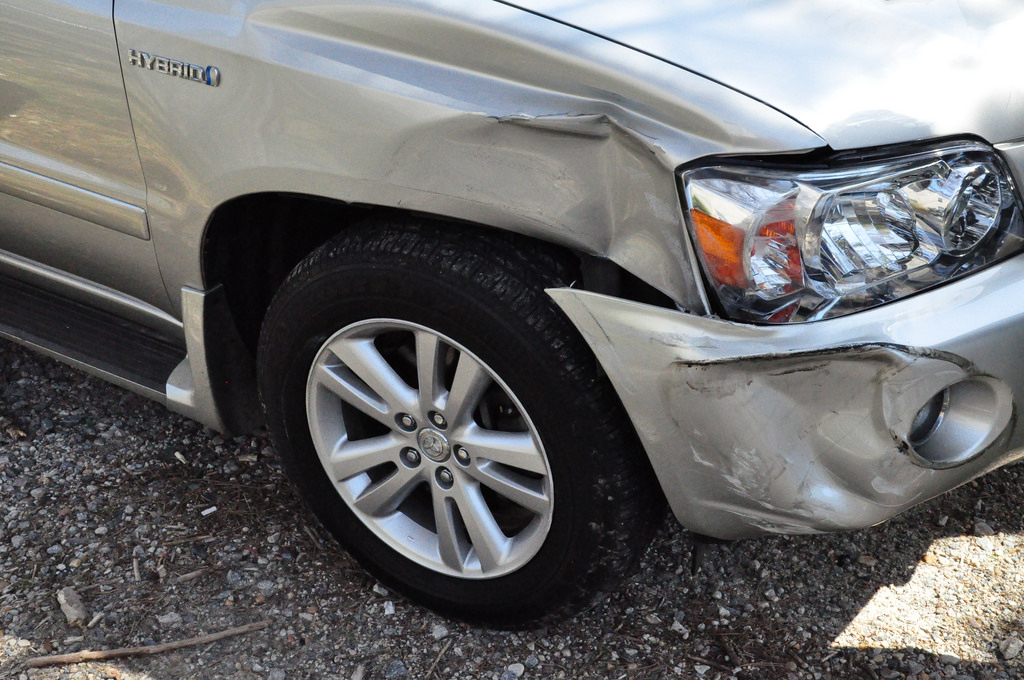
01 Dec Auto Body Fender Repair
Auto Body Fender Repair
Auto body fender repair involves a combination of chemicals, hand and power tools, welding, grinding, sanding, lifting, and material handling. Each stage of the repair presents different hazards, so employees should understand the work being performed and use the proper tools, ventilation, and PPE.
Surface Preparation
Before repairing a damaged fender, remove dirt, grease, tar, and other contaminants that could interfere with the repair process.
When using cleaners, degreasers, or solvents:

- Review the Safety Data Sheet (SDS) before use.
- Work in a well-ventilated area.
- Wear appropriate chemical-resistant gloves and eye protection.
- Keep flammable products away from sparks, flames, welding, and other ignition sources.
- Keep containers closed and properly labeled when not in use.
- Dispose of contaminated rags and materials properly.
Never use an unfamiliar solvent without first understanding its hazards.
Hand Tools and Metal Repair
Fender repair may involve hammers, dollies, picks, files, spoons, and other striking or shaping tools. Inspect tools before use and remove damaged tools from service.
Wear safety glasses with side shields when hammering, shaping, cutting, or performing other work that could produce flying particles. Keep hands positioned away from striking points and sharp metal edges.
Damaged sheet metal can be extremely sharp, so appropriate work gloves should be worn when handling it.
Welding and Hot Work
Metal or plastic welding can expose workers to heat, sparks, radiation, fumes, and fire hazards.
When welding:
- Provide adequate ventilation.
- Remove or protect combustible materials.
- Use welding curtains or screens to protect nearby employees.
- Wear the appropriate welding helmet, gloves, protective clothing, and other required PPE.
- Keep suitable fire-extinguishing equipment nearby.
- Follow applicable hot-work procedures.
Respiratory protection may be required depending on the material, coatings, welding process, and ventilation available. Respirators must be properly selected and used under an appropriate respiratory protection program.
Grinding and Sanding
Grinding and sanding can generate dust, metal particles, sparks, and noise.
Use dust collection or local exhaust ventilation when available. Wear appropriate eye and face protection, hearing protection, and respiratory protection when required.
Inspect grinding and sanding equipment before use and make sure guards and other safety devices are properly installed. Never use damaged discs, wheels, or accessories.
Lifting and Positioning Parts
Fenders, panels, bumpers, and other vehicle components may be heavy, awkward, or difficult to position.
Use carts, dollies, lifting devices, or another employee when necessary. Keep the load close to your body, maintain stable footing, and avoid twisting while lifting or positioning parts.
When working around raised vehicles or components, use properly rated lifting and support equipment. Never rely on a hydraulic jack alone to support a vehicle while working underneath it.
Remember
Auto body fender repair combines chemical exposure, sharp metal, flying particles, welding, power tools, and material-handling hazards. Review the SDS, inspect tools, provide proper ventilation, wear required PPE, and use safe lifting and support methods throughout the repair.