


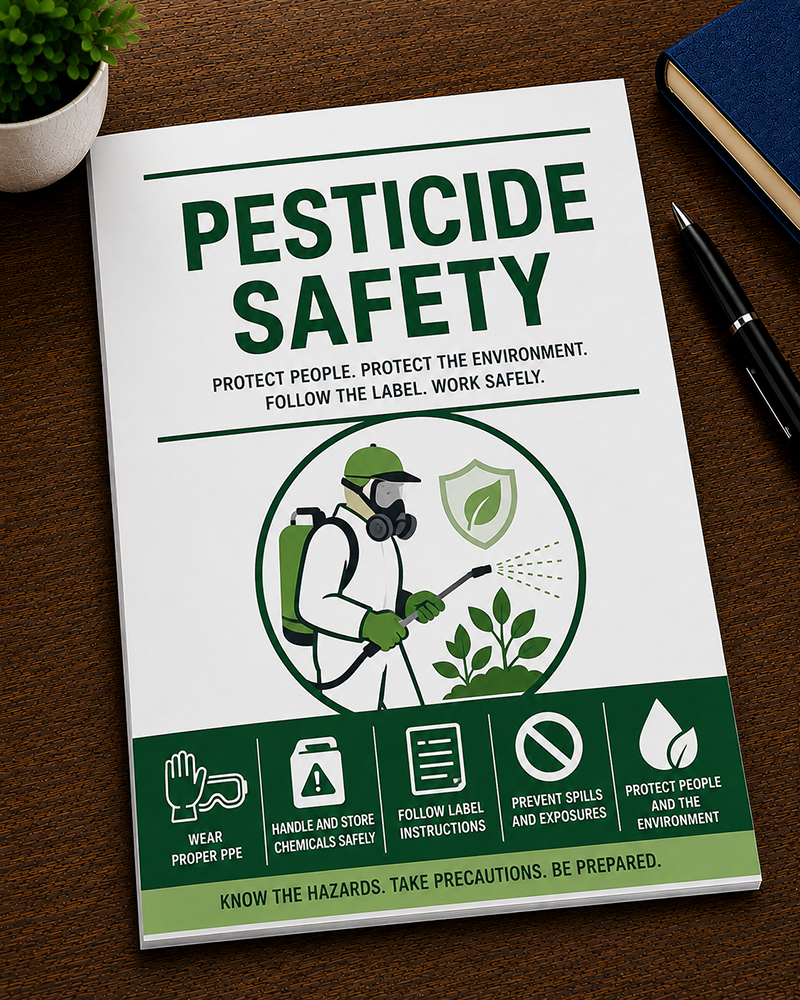
Pesticide Safety Program
$25.00
The Pesticide Safety Program establishes requirements for protecting employees who handle, apply, store, transport, mix, load, or work around pesticides and pesticide-treated areas. Pesticides may expose employees to hazardous chemicals through inhalation, skin or eye contact, ingestion, spills, drift, contaminated equipment, or improper handling. The program emphasizes pesticide safety, exposure prevention, hazard communication, proper application practices, and employee training to reduce occupational pesticide exposure and protect employees, the public, and the environment.
The program addresses pesticide labels, Safety Data Sheets (SDS), personal protective equipment (PPE), pesticide storage, mixing and loading, application equipment, restricted-entry areas, spill prevention and response, decontamination, hygiene, transportation, disposal, and emergency procedures. Employees must read and follow pesticide labels and manufacturer instructions, use required PPE, prevent incompatible materials from being mixed, and avoid eating, drinking, smoking, or applying cosmetics while handling pesticides. Pesticides must remain properly labeled, securely stored, and protected from unauthorized access. The program also addresses equipment inspections, exposure symptoms, first aid, emergency medical response, employee responsibilities, and training to help prevent pesticide poisoning, chemical exposure, spills, and environmental contamination.
Description
The Pesticide Safety Program provides a structured framework for controlling occupational hazards associated with the handling, mixing, loading, application, storage, transportation, and disposal of pesticides. It establishes responsibilities for management, supervisors, pesticide handlers, applicators, and other affected employees and addresses hazard evaluation, exposure prevention, safe handling practices, and protection of employees who may enter pesticide-treated areas.
The program addresses pesticide labels and Safety Data Sheets, PPE, mixing and loading, application equipment, storage and security, restricted-entry areas, transportation, spill prevention and response, decontamination, personal hygiene, equipment inspections, disposal, exposure symptoms, first aid, and emergency medical response. It also establishes practices for preventing pesticide drift and contamination, controlling access to pesticide storage and treatment areas, maintaining properly labeled containers, and responding appropriately to spills or suspected employee exposures.
Provided in editable Microsoft Word format, the program can be customized for your company’s pesticide products, application activities, equipment, storage areas, employee exposures, and work practices. It can be incorporated into a comprehensive Safety Manual or used as a standalone Pesticide Safety Program.


